In an age where digital screens dominate our communication, it’s almost alien to think there was a time when the physical act of typing had a tactile, almost rhythmic quality to it.
Our fingers danced across keys, not with the limited choreography reserved for smartphones but with a full ten-finger ballet.
The typewriter, that enigmatic machine that required no electricity, only paper, and ambition, was the vessel for this dance.

The typewriter’s journey began in the late 1800s, a period brimming with innovation in communication technology.
The Henry Ford Museum of American Innovation houses relics from this era, including the typewriter, which curator Kristen Gallerneaux reveals was not an instant sensation.
Its inception owed much to Christopher Sholes, a printer from Milwaukee, who, inspired by a magazine article, set out to create what would become the first commercially successful typewriter alongside Carlos Glidden.

Sholes and Glidden’s creation, aptly named after themselves, was a marvel of engineering.
It balanced the need for durability, to withstand the “bang away on the keys” vigor required by users, with the precision needed for clear typing.
Despite its ingenuity, the typewriter’s path to becoming a household name was slow, gaining momentum only in 1874.
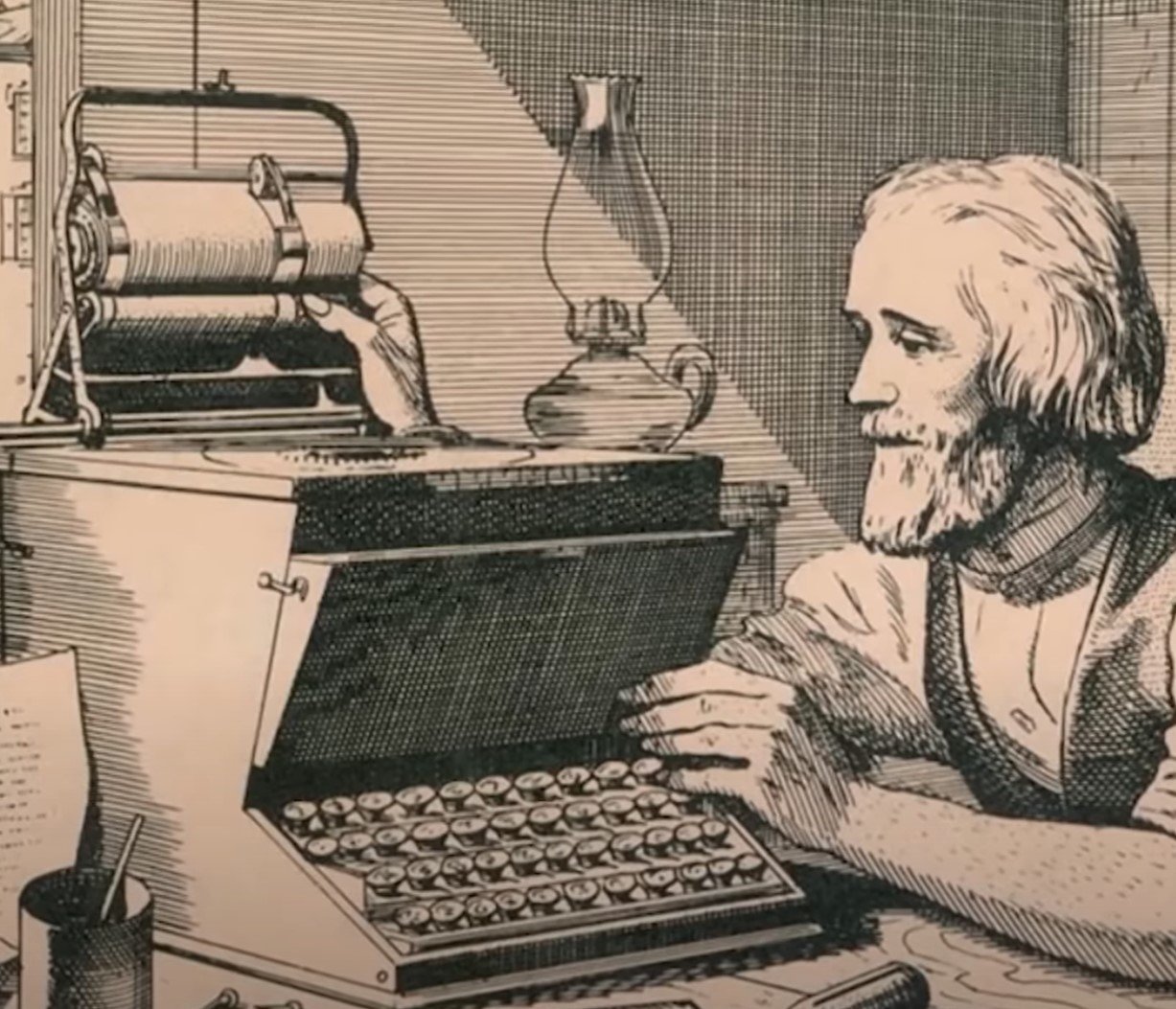
The typewriter wasn’t just a technological triumph; it was a design marvel.
The Sholes and Glidden typewriter introduced the QWERTY keyboard layout, a design so efficient it remains with us today, preventing the jamming of letters by spacing out commonly used pairs.
This layout was a solution to a mechanical problem that inadvertently shaped the way we interact with keyboards centuries later.

By the late 1880s, the typewriter began reshaping the American workplace.
Initially dominated by male workers, the introduction of the typewriter contributed to a significant shift.
By 1910, the office environment had transformed, with women making up about 80% of professional typists.
This shift wasn’t just about technology; it was a social revolution, redefining gender roles within the professional world.

The quest for a quieter typing experience led to innovations like the Nodin typewriter.
Its name, a clever nod to its silent operation, exemplified the ongoing evolution of typewriter design.
While the Nodin is a rare gem, its existence highlights the creative lengths inventors went to improve the typing experience.

Our journey through the history of typewriters doesn’t even touch upon electric models, which introduced a new layer of convenience and noise to the typing process.
Yet, there’s something about the mechanical simplicity and tactile feedback of early typewriters that holds a special place in the hearts of those who’ve experienced it.
The nostalgic sound of the keys going clickity-clack is something many people still love to hear.

In a delightful twist, the narrative circles back to the act of typing itself.
The curator at the Henry Ford Museum offers a chance to type on one of these venerable machines.
The experience is a stark reminder of the physicality of typing on a typewriter, a stark contrast to the effortless glide over modern keyboards.
It’s a moment of connection to the past, a reminder of the evolution of writing technology and the enduring charm of typing.

The typewriter, with its rich history and mechanical beauty, is a bridge to a bygone era of communication. For those who remember, it’s a nostalgic trip down memory lane.
For the uninitiated, it’s an invitation to explore the tactile joys of typing, a world where each letter had weight, and every word was a physical creation.
As we delve into the digital age, the typewriter stands as a testament to the human desire to connect, communicate, and create.
Learn more about the nuanced, fascinating history of the humble typewriter in the video below!
Please SHARE this with your friends and family.
